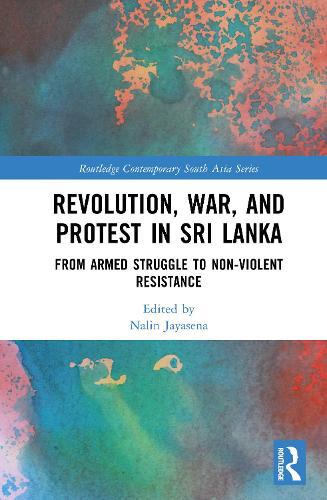
Revolution, War, and Protest in Sri Lanka
Interrogating the divide between violent and non-violent protest, including Aragalaya, this volume highlights the importance of strategically connecting seemingly unrelated historical events and political movements across Sri Lanka's North and South, spanning the period from 1948 to 2022, to offer fresh insights into intranational conflict.
By bringing the different protest movements of insurgency and civil disobedience (as well as the ethno-religious communities aligned with them), under one umbrella, this book represents a call for political action to address long-standing socio-political conflicts plaguing Sri Lanka. Divided into three sections (revolution and militant violence (1971–2009); postwar politics (2009 to present); and civil disobedience and the Aragalaya (2022)), the book offers case study chapters that draw on a range of sources such as literature, film, and performance studies, citing aesthetic expressions as acts of political resistance. Providing a conceptual framework for how we define protest, and how protest intersects with war and revolution, the book deliberately reframes the act as a continuum that includes insurgency, civil disobedience, and artistic resistance.
Ultimately challenging established regional and ethno-linguistic divisions that have been understudied by scholars of Sri Lanka since the 1970s, this book will be of interest to academics and postgraduate students in the field of South Asian studies in particular, as well scholars researching protest movements and peace studies more generally.
Description
Interrogating the divide between violent and non-violent protest, including Aragalaya, this volume highlights the importance of strategically connecting seemingly unrelated historical events and political movements across Sri Lanka's North and South, spanning the period from 1948 to 2022, to offer fresh insights into intranational conflict.
By bringing the different protest movements of insurgency and civil disobedience (as well as the ethno-religious communities aligned with them), under one umbrella, this book represents a call for political action to address long-standing socio-political conflicts plaguing Sri Lanka. Divided into three sections (revolution and militant violence (1971–2009); postwar politics (2009 to present); and civil disobedience and the Aragalaya (2022)), the book offers case study chapters that draw on a range of sources such as literature, film, and performance studies, citing aesthetic expressions as acts of political resistance. Providing a conceptual framework for how we define protest, and how protest intersects with war and revolution, the book deliberately reframes the act as a continuum that includes insurgency, civil disobedience, and artistic resistance.
Ultimately challenging established regional and ethno-linguistic divisions that have been understudied by scholars of Sri Lanka since the 1970s, this book will be of interest to academics and postgraduate students in the field of South Asian studies in particular, as well scholars researching protest movements and peace studies more generally.